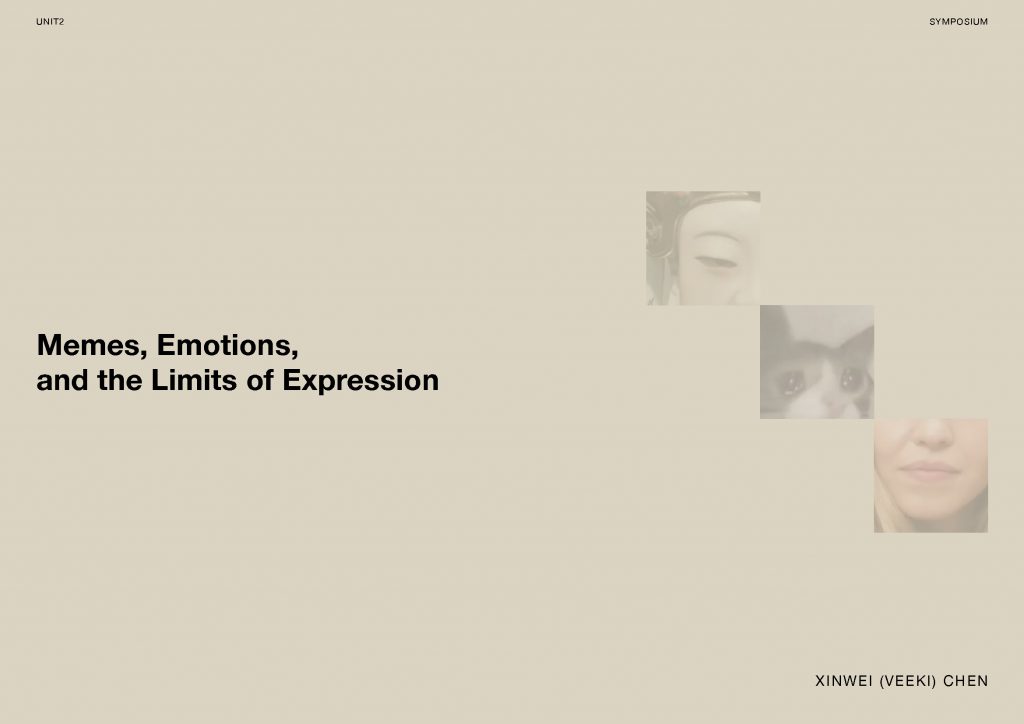
My project began with a simple but powerful cultural moment:
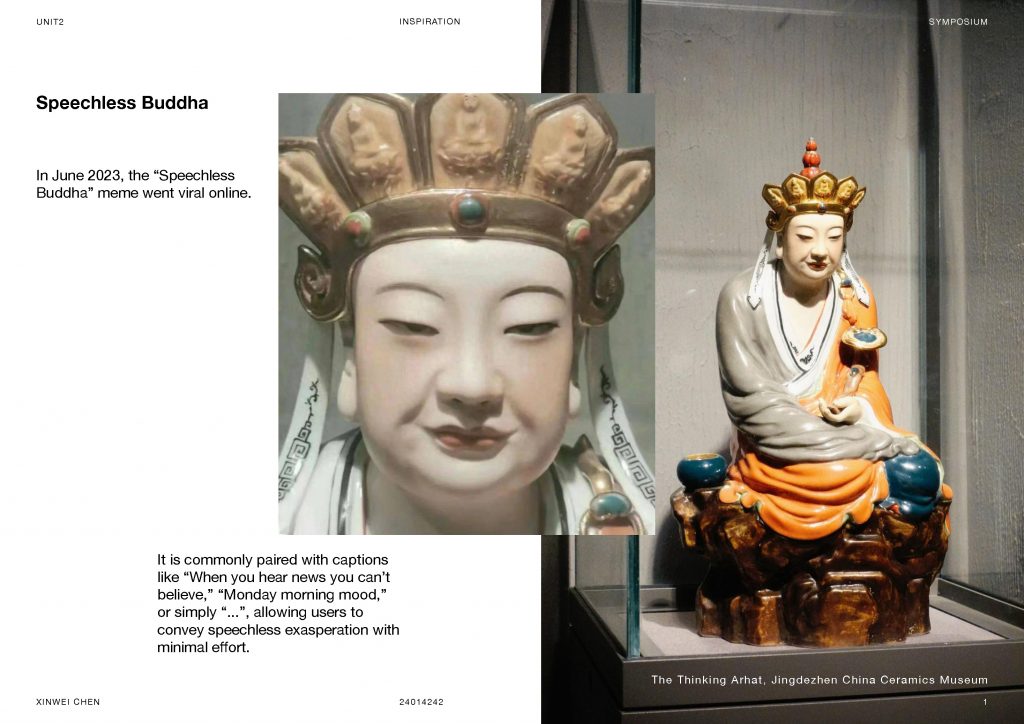
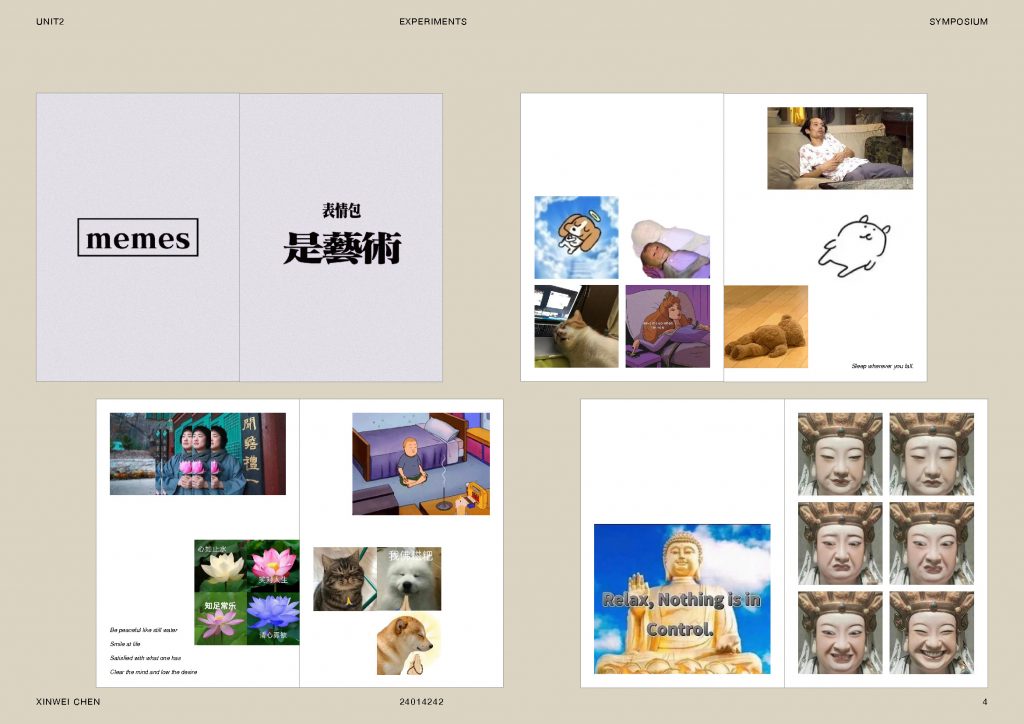
In June 2023, a meme known as “Speechless Buddha” suddenly went viral across China.
The meme originates from The Thinking Arhat, a ceramic sculpture displayed at the Jingdezhen China Ceramics Museum.
Online, users paired the image with captions like:
- “When you hear news you cannot believe.”
- “Monday morning mood.”
- Or simply: “…”. three dots
This minimal, silent figure became a way for people to communicate speechless exasperation, disappointment, fatigue — without ever saying those words.
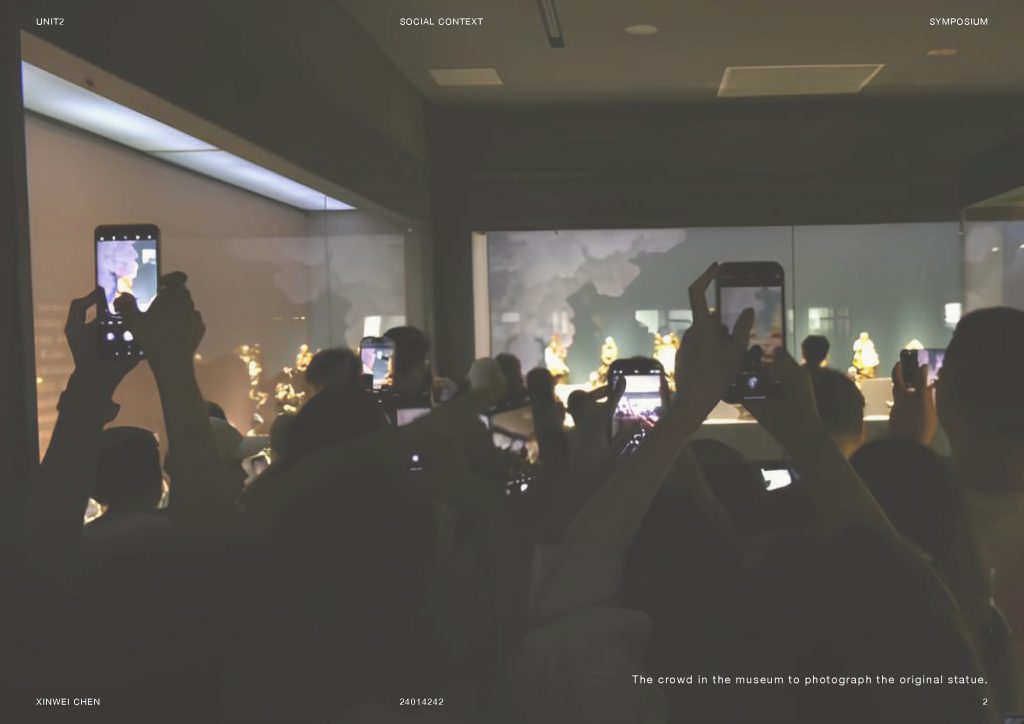
When it went viral, thousands of visitors rushed to the museum to take photos of it, turning a quiet artwork into a national emotional symbol.
This was the starting point for my investigation.
As I looked deeper, I realised this meme connects directly to social attitudes widely discussed in recent years:
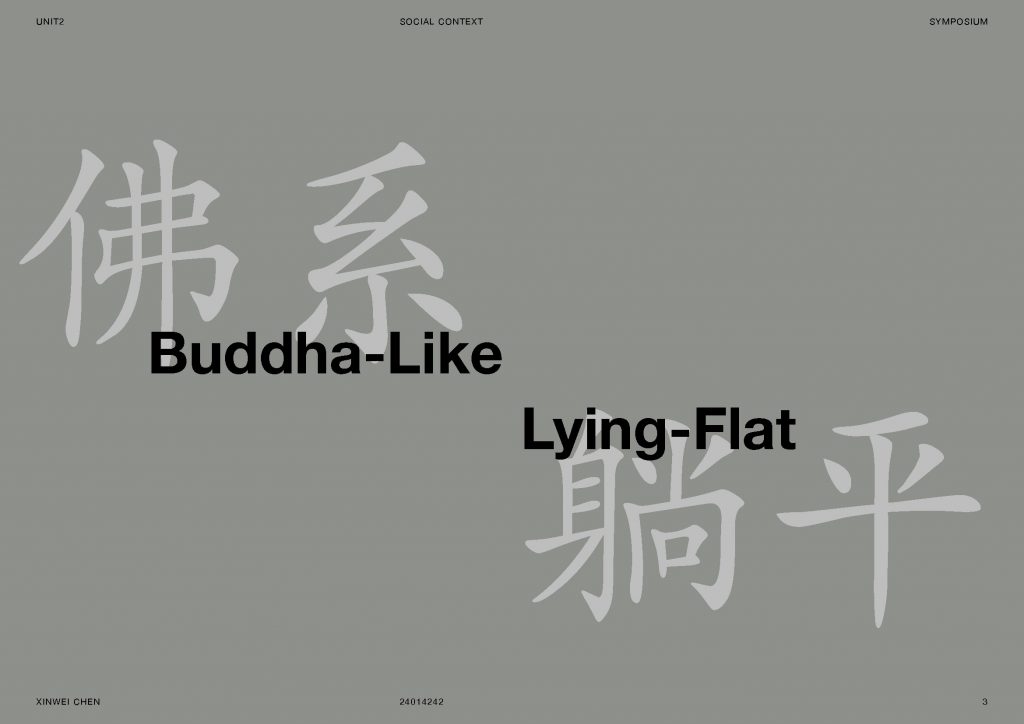
Buddha-like and lying-flat.
These are coping mechanisms that young people in China use in response to high pressure, competition, and social expectations.
“Buddha-like” suggests staying calm, keeping desires low, not fighting back.
“Lying-flat” suggests withdrawing from the competitiveness of society.
But behind this peaceful façade, there is often silent frustration, exhaustion, and emotional numbness.
Many young people express this hidden struggle only through online anonymity.
And memes — especially sarcastic or self-deprecating ones — have become one of their primary emotional outlets.
As I collected captions attached to Buddha-like memes, I found two very distinct emotional layers.
The surface layer contains peaceful, positive phrases such as:
- “Sleep wherever you fall.”
- “Be peaceful like still water.”
- “Smile at life.”
- “Be satisfied with what you have.”
But the hidden layer reveals something deeper and more painful:
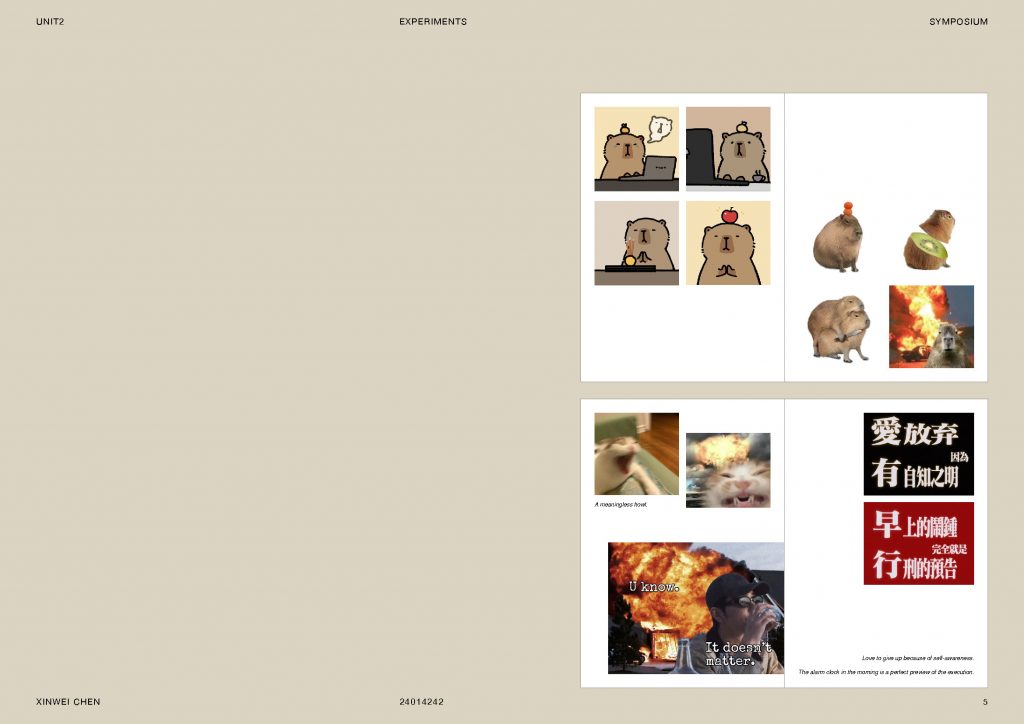
- “Love to give up because of self-awareness.”
- “The alarm clock is a perfect preview of execution.”
The contrast was striking.
The peaceful exterior hides a strong internal scream.
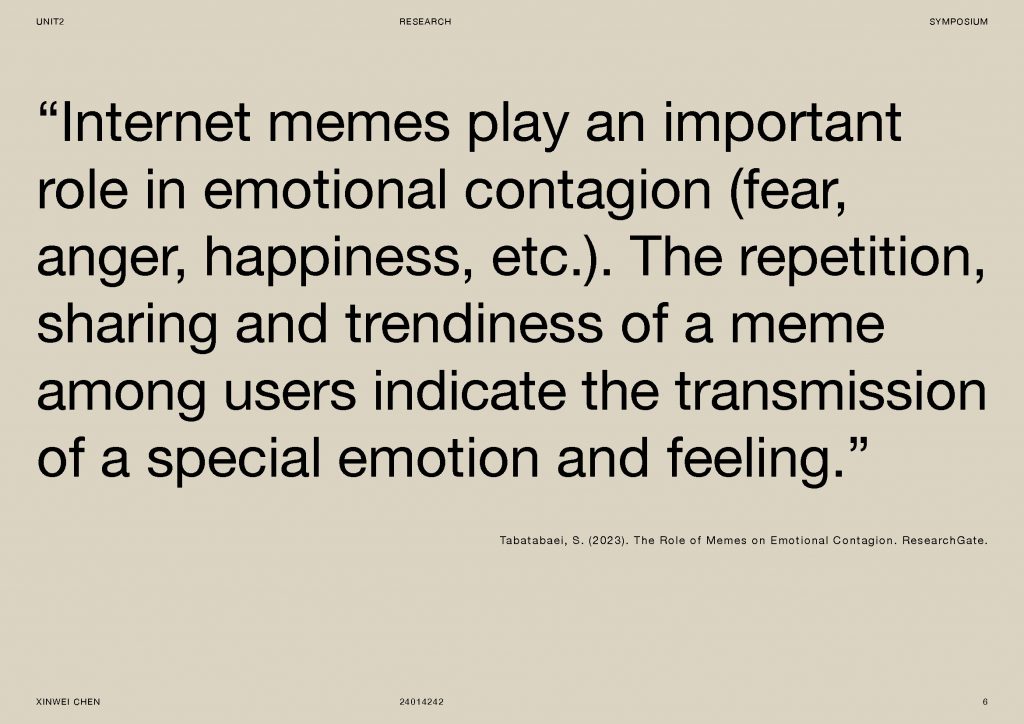
I also looked into existing academic research.
One reference that strongly informed my project is by Tabatabaei (2023)
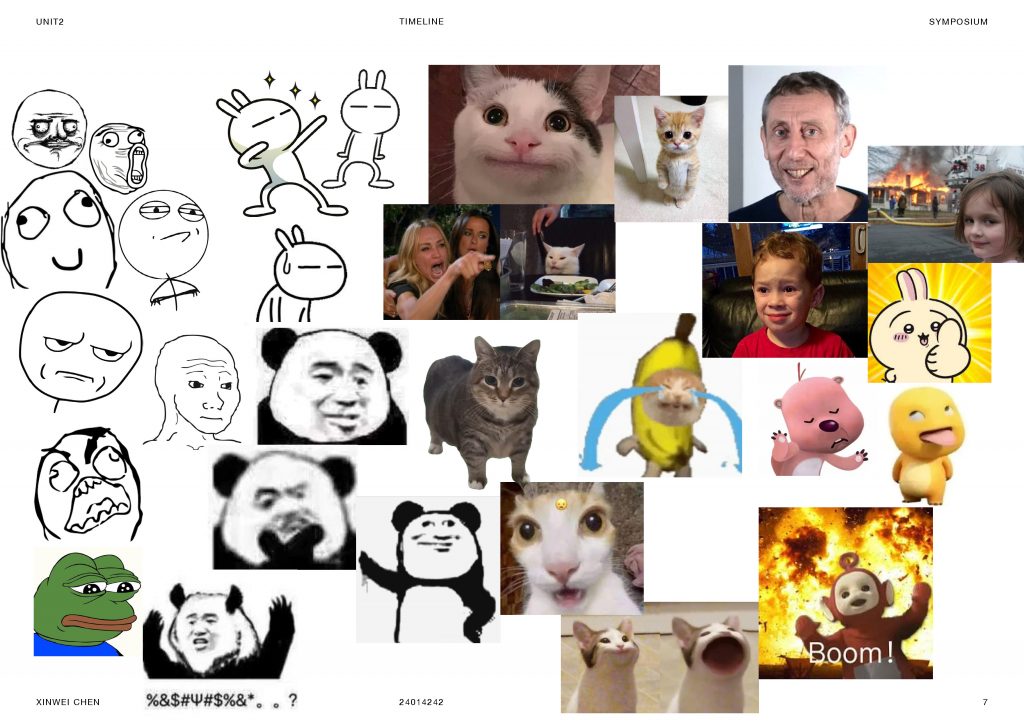
Looking through the timeline of memes since around 2007, I found memes developed from simple sketches to real life photos. And memes have become a carrier that subverts the status of text communication.
It brings my research question that are people repeating images follow the social trends without thinking, or are they hiding their feelings behind memes?
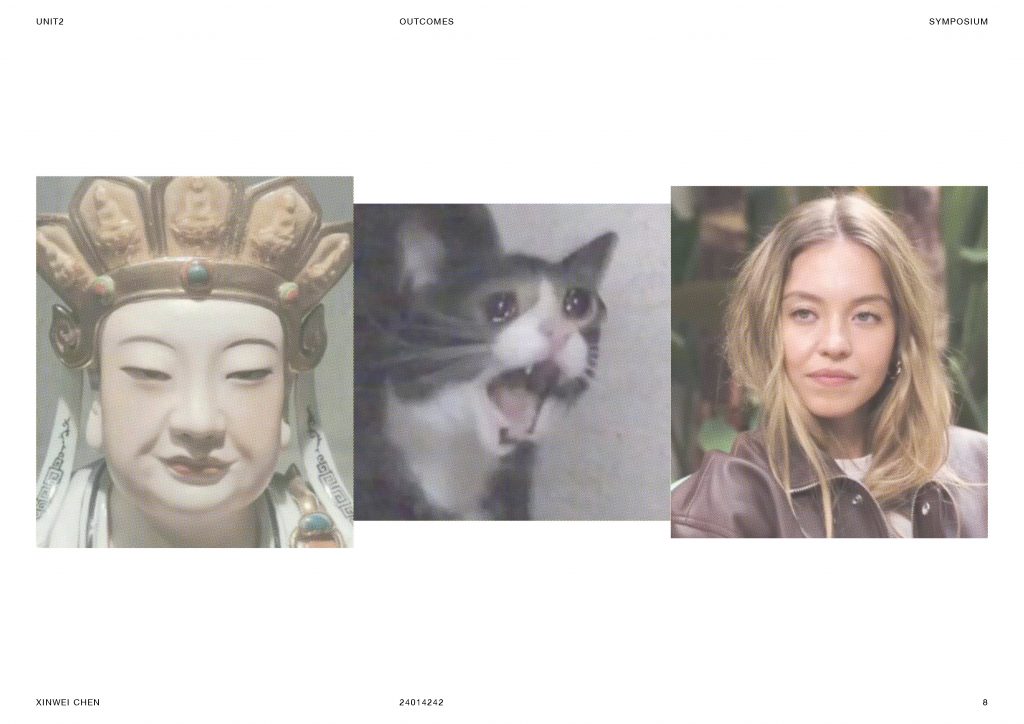
These are the three memes that I picked under the buddha-like and lying-flat culture context. They share the emotions either disappointment or screaming inside.
So I took memes out of the fast-scrolling online environment
and transforming them into large-scale printed artefacts.
People must confront it.
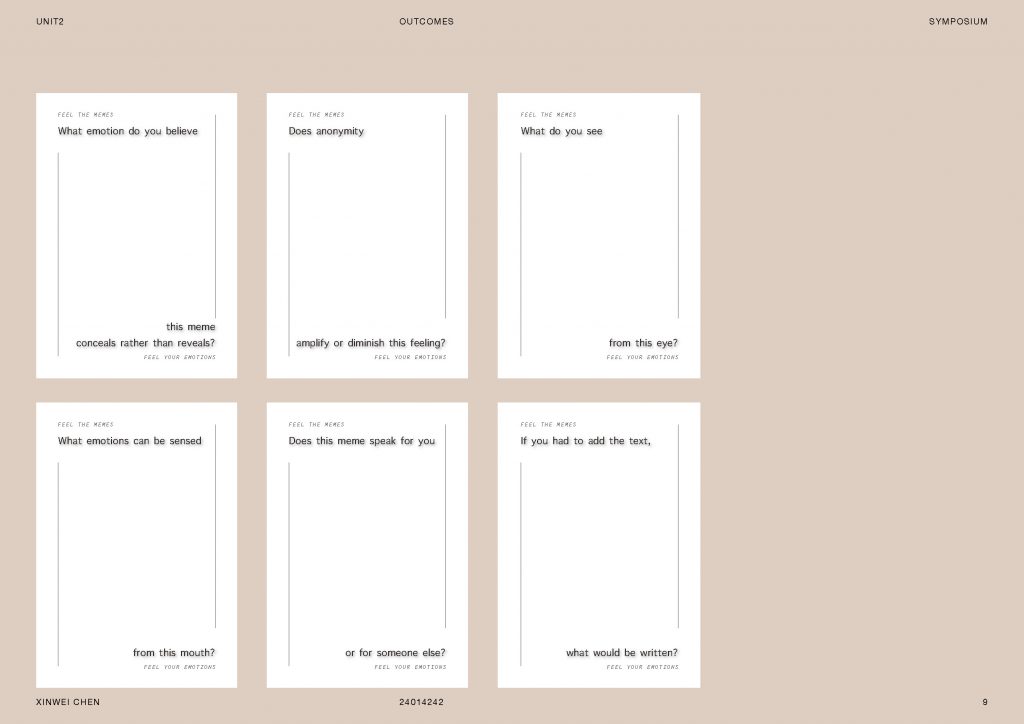
I used transparent question cards beside each print.
These cards asked audiences reflective questions, such as:
- What emotion do you believe this meme conceals rather than reveals?
• • Does anonymity amplify or diminish this feeling?
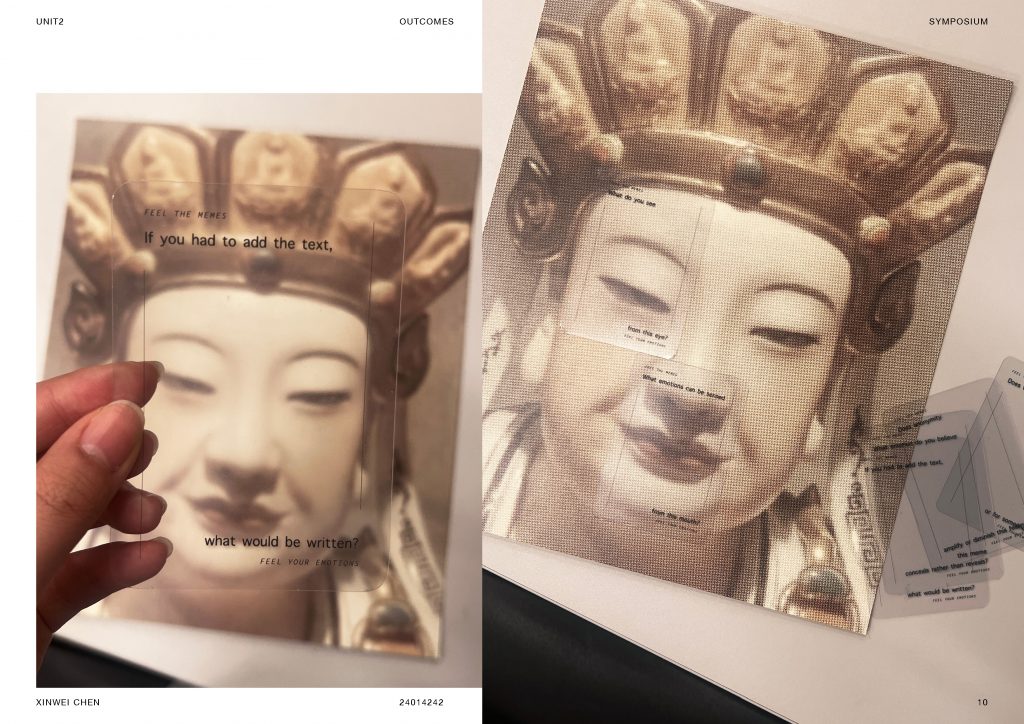
Then they will become an interactive installation that audience could place the question cards.
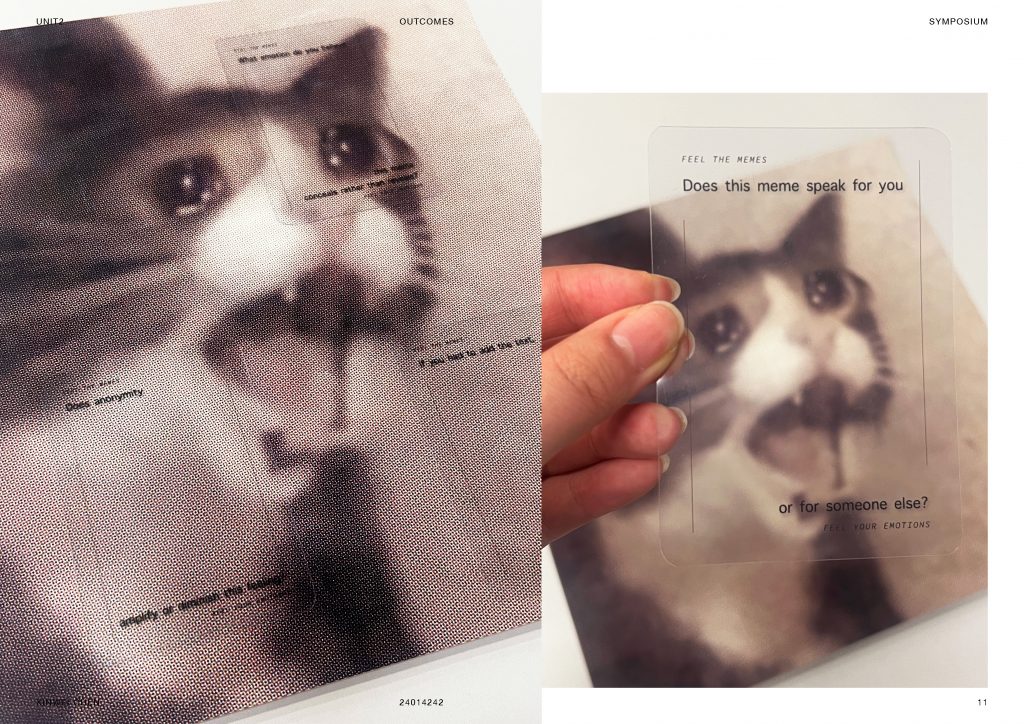
Participants could use the cards to frame the area they want to focus on, and think deeply about what emotions can be sensed from the facial expressions, the eyes the mouth etc.
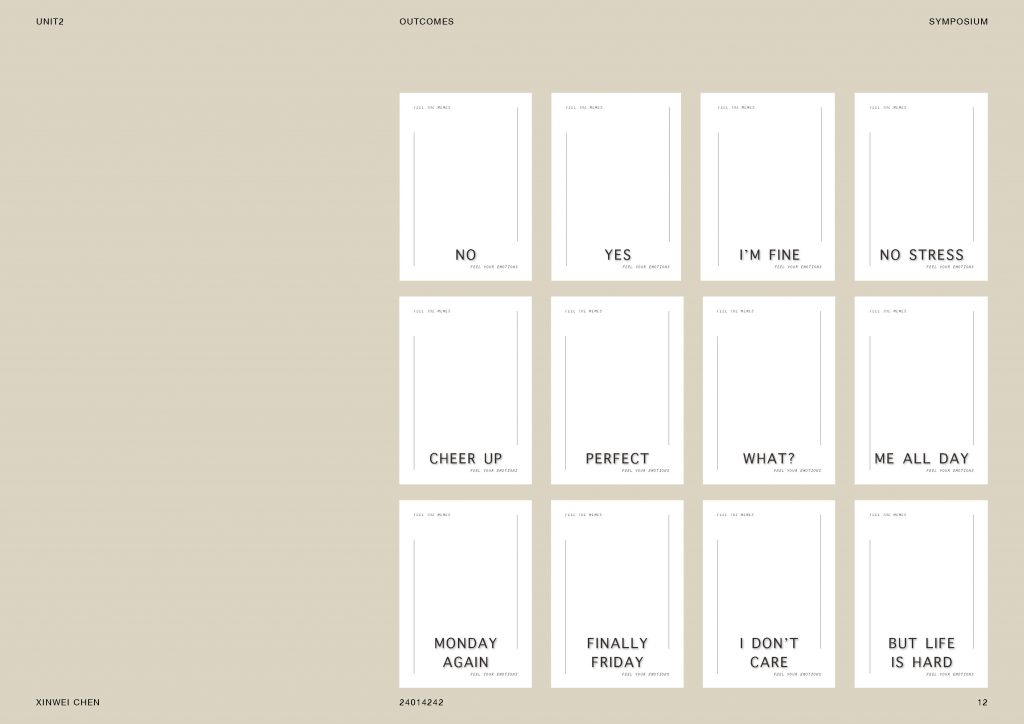
Besides, there are caption only cards as well.
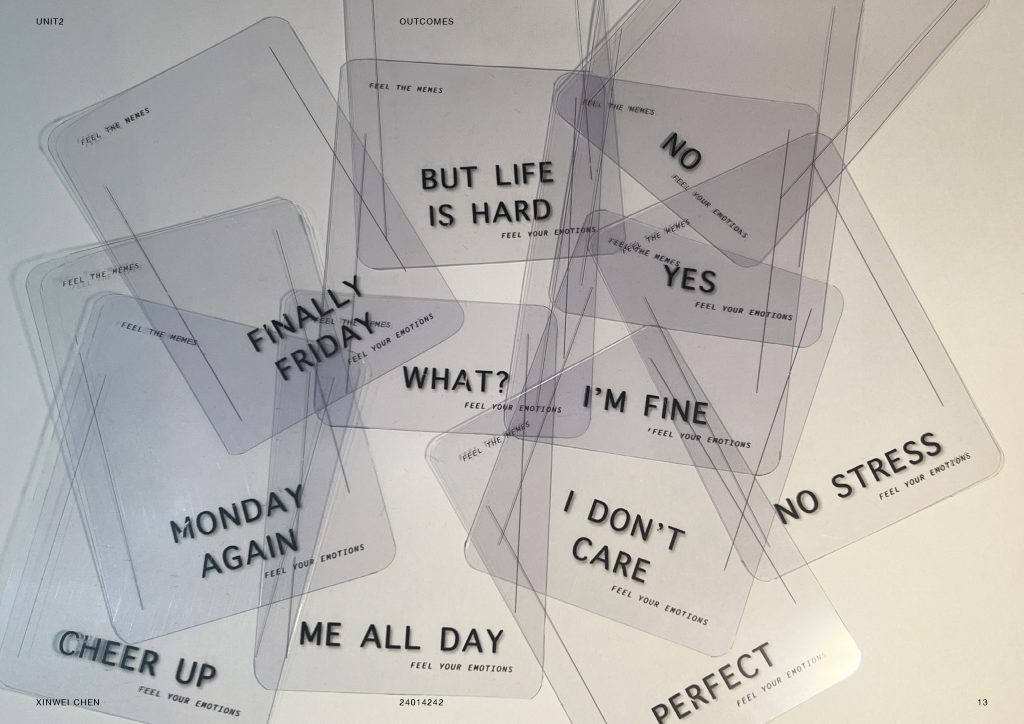
Those are selected from memes that could show up in daily life.
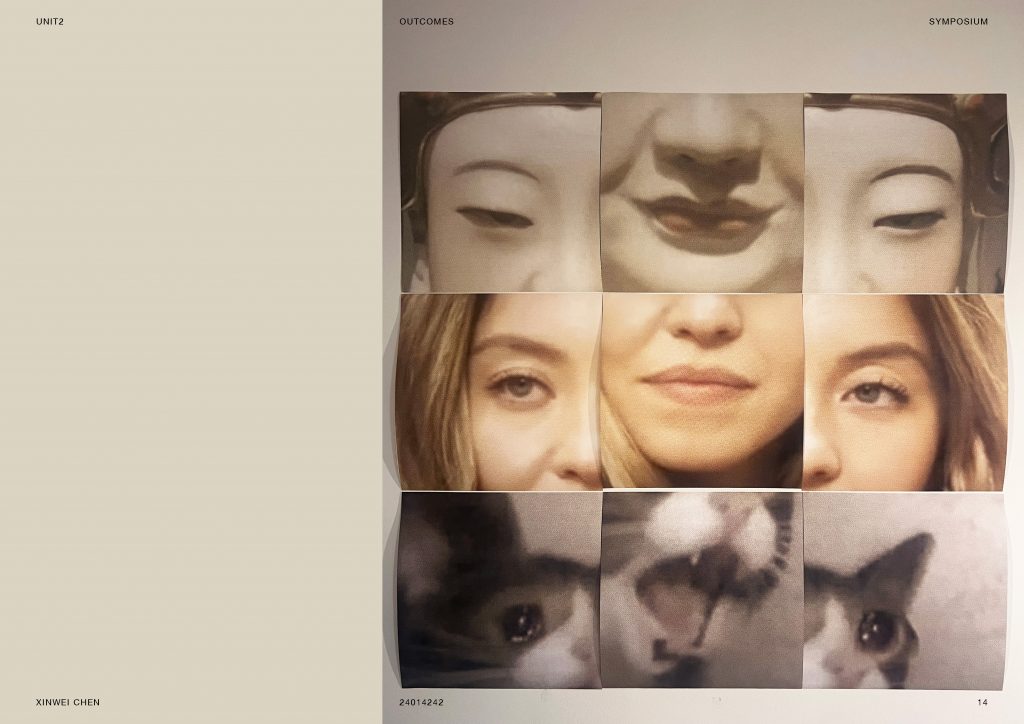
I cropped the three memes and put them on the wall as people were looking at them in a galley, really concentrating on the feelings that the memes delivered.
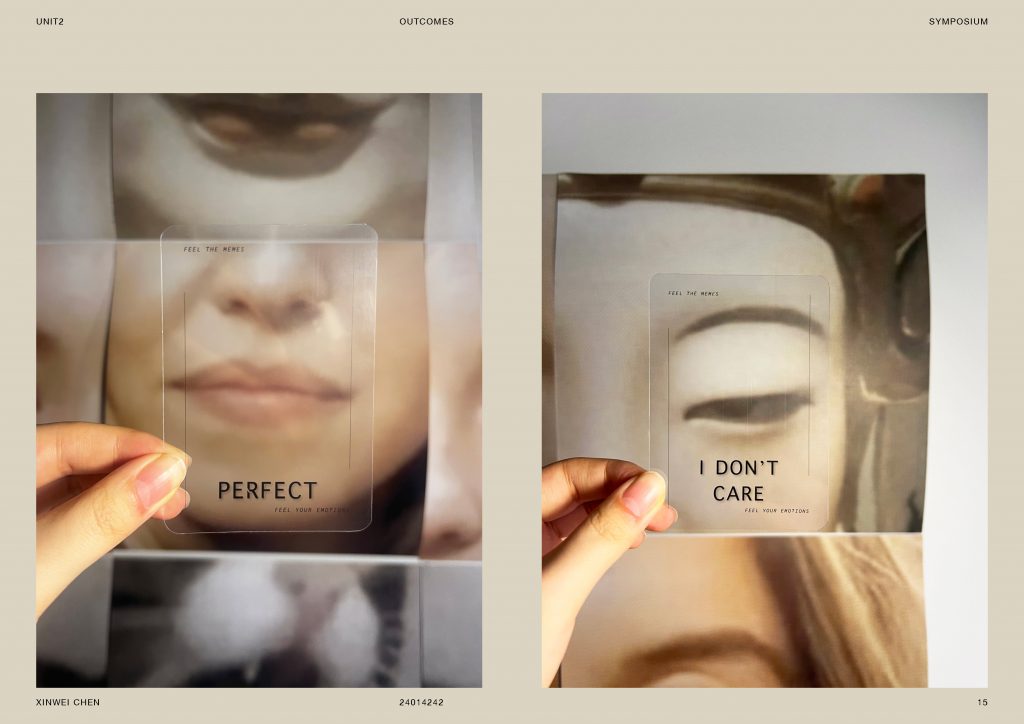
Then the transparent caption cards would be picked by the audience.
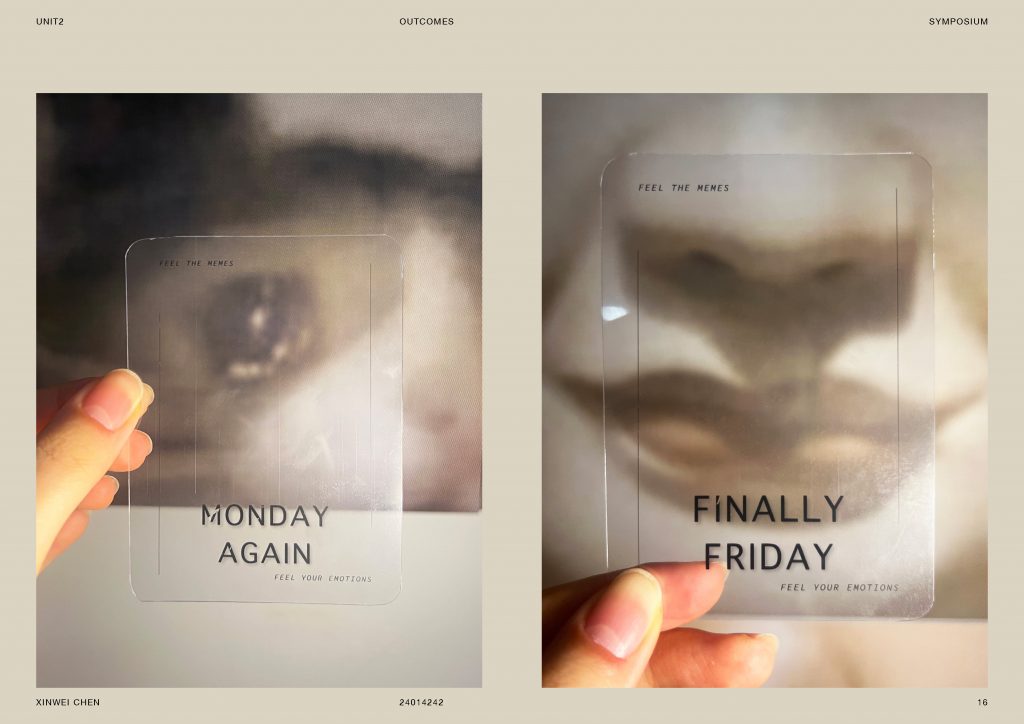
They could make up their own memes by physically placing the captions in front of the prints.
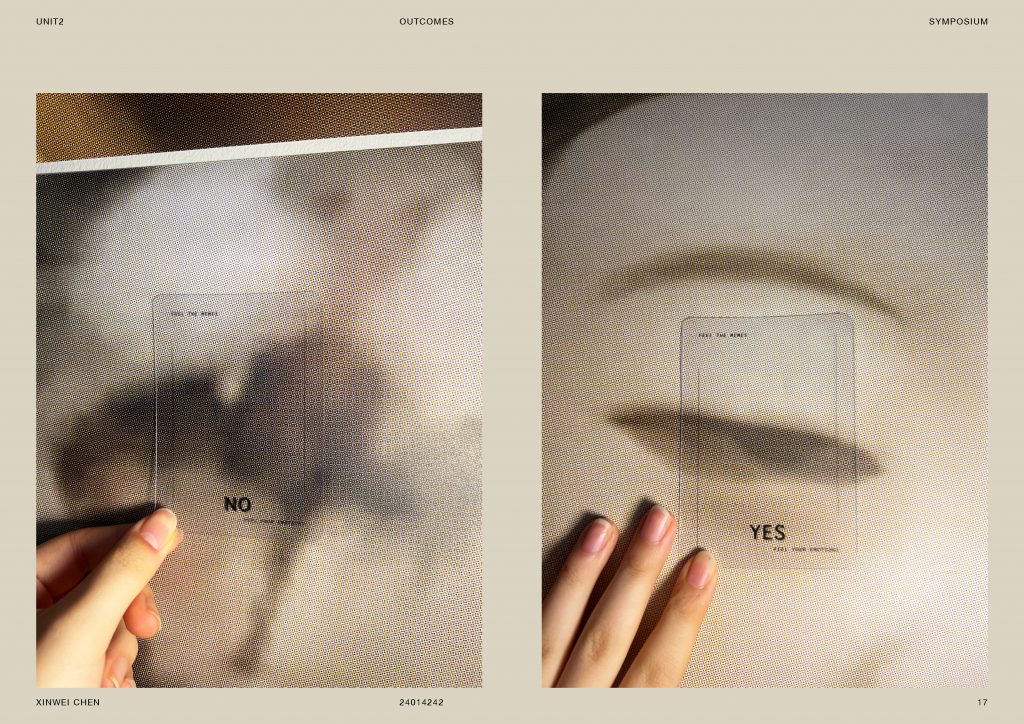
Through this interactive experience, participants could detailedly consider their responses to the memes since the pace of consuming and delivering memes slow down.
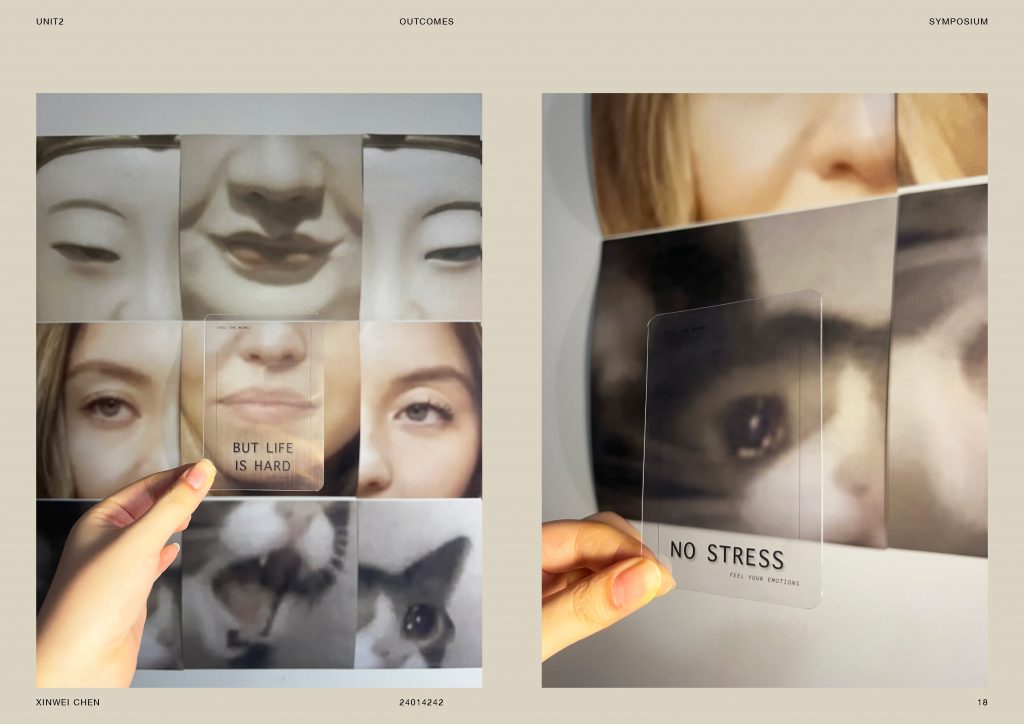
By turning memes into physical installations,
I aim to create a space where we can finally pause
and sense the emotional complexity behind the silence.
Leave a Reply