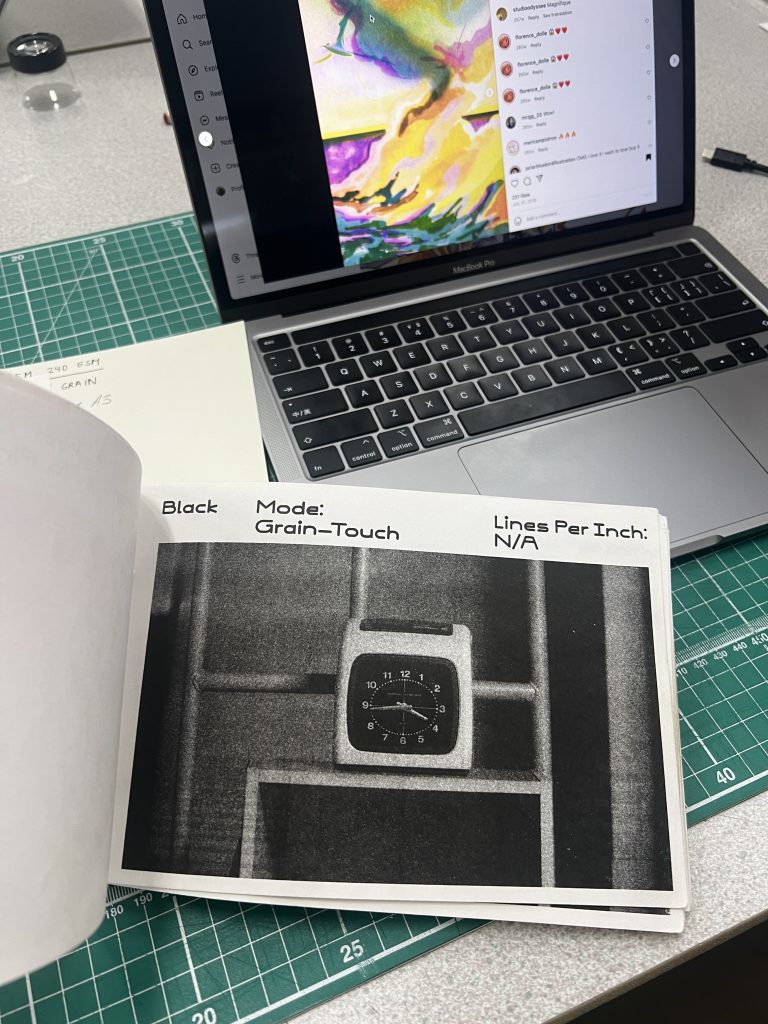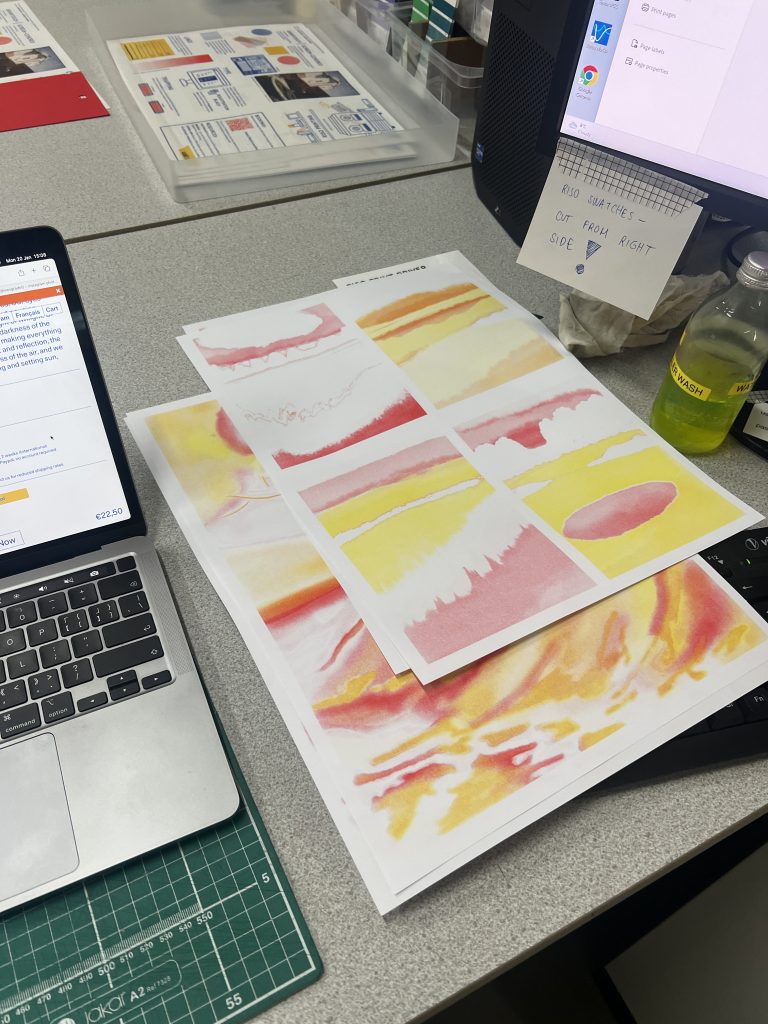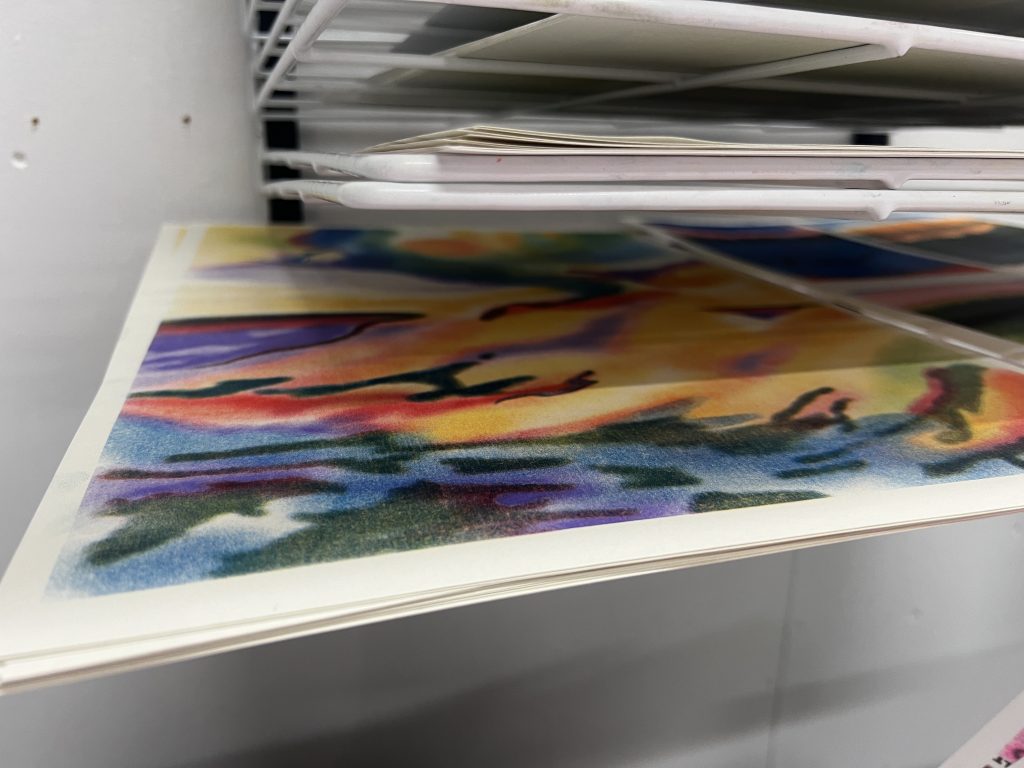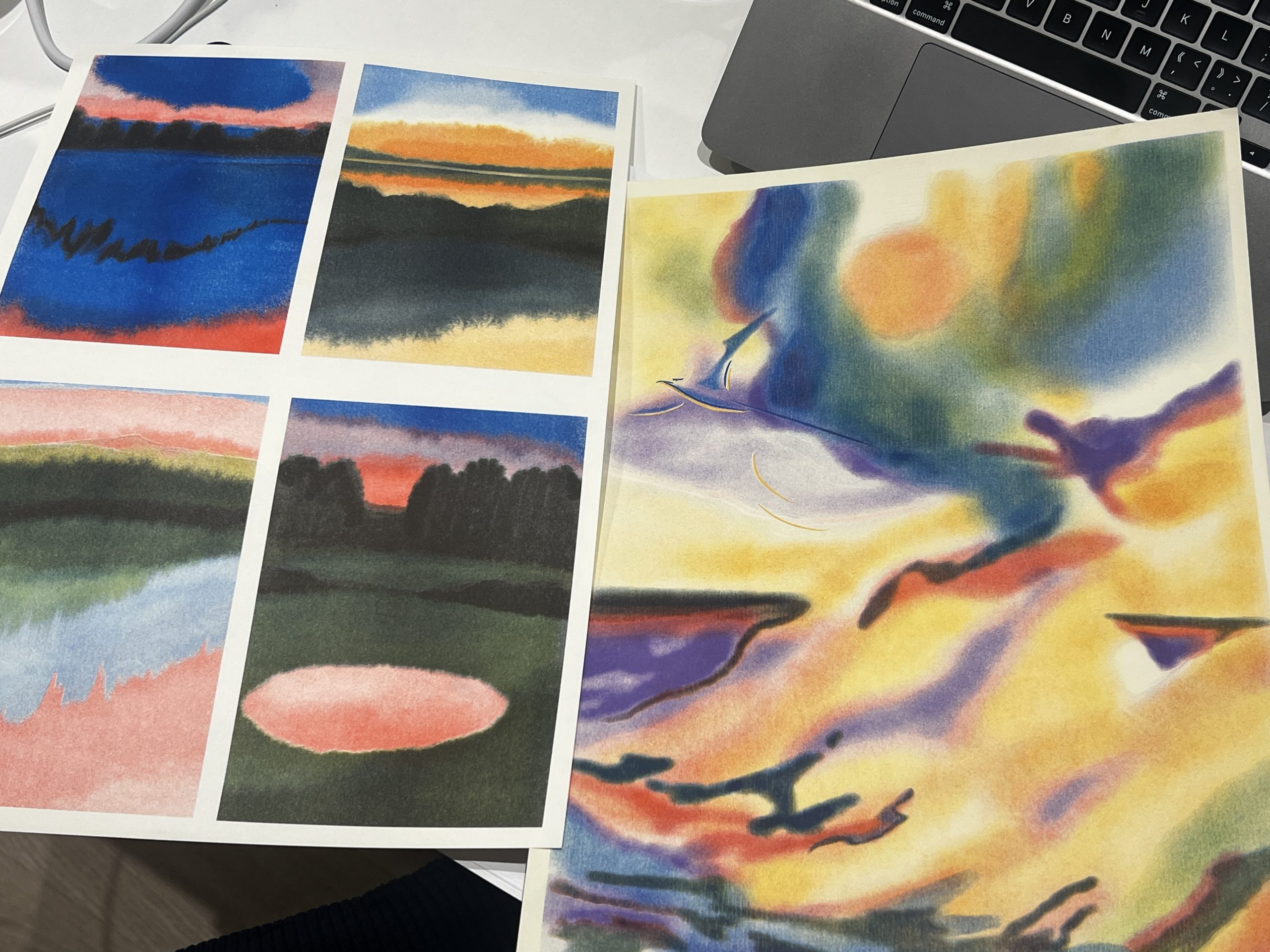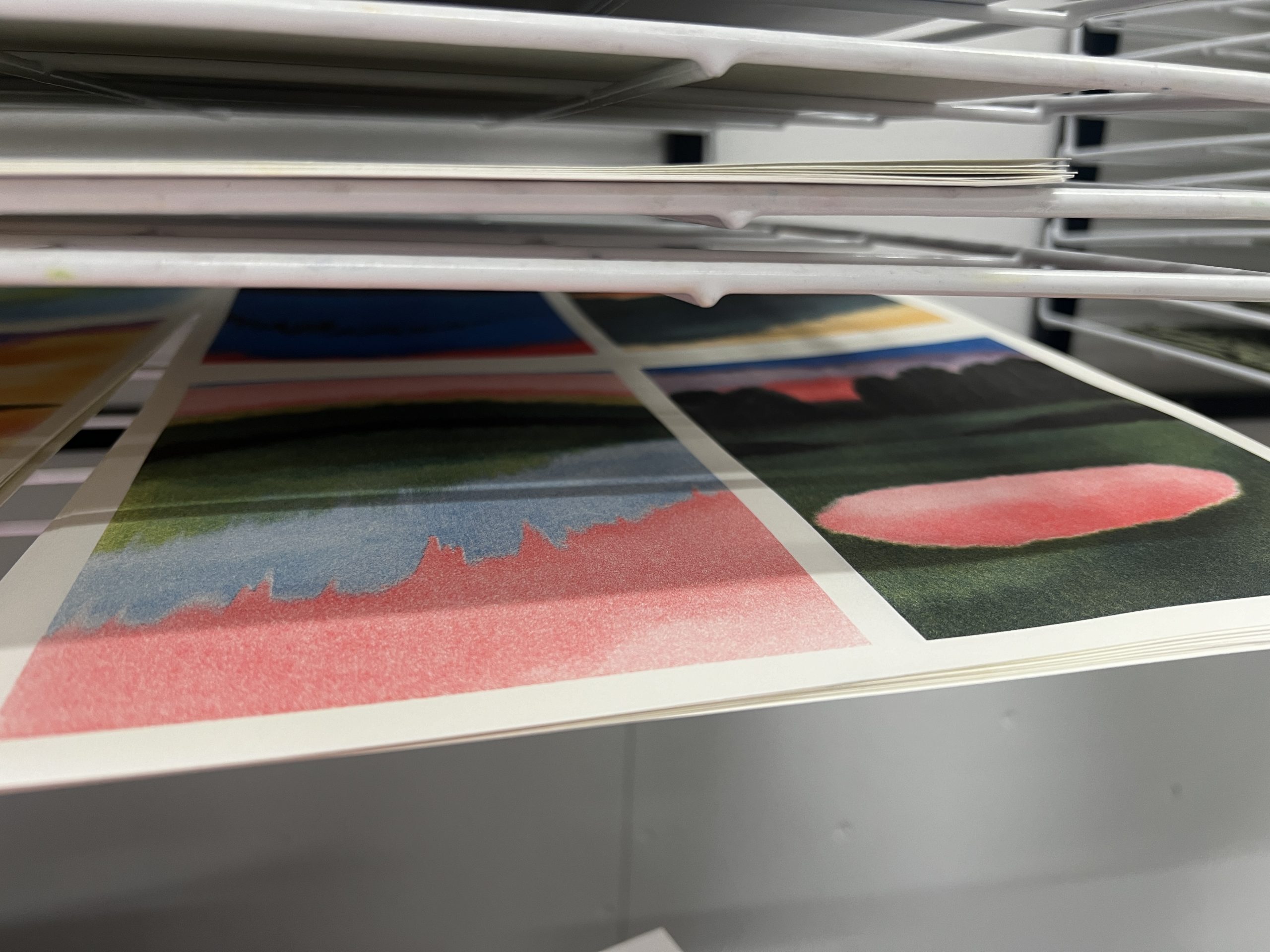
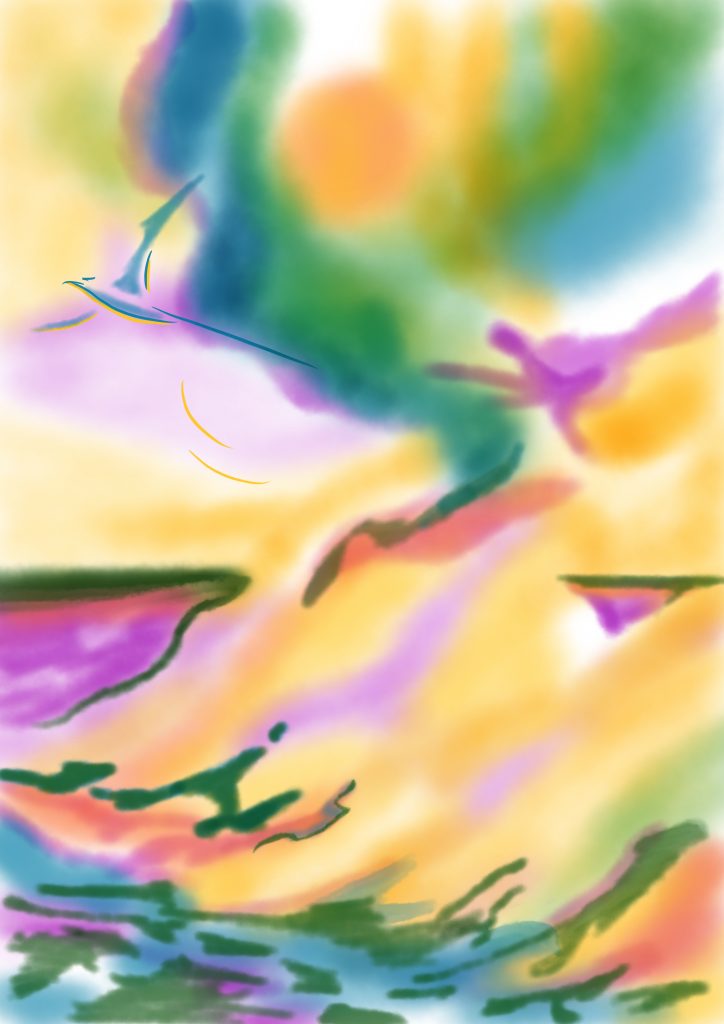
The first challenge I faced is that the colour cannot be completely copied due to the limited colour palette. However, the layering process and the overlapping colours create intentional effects. For those illustrations from two artists, I used grain-touch mode when printing, which is a good effect for blending colours and making a smooth colour shift.
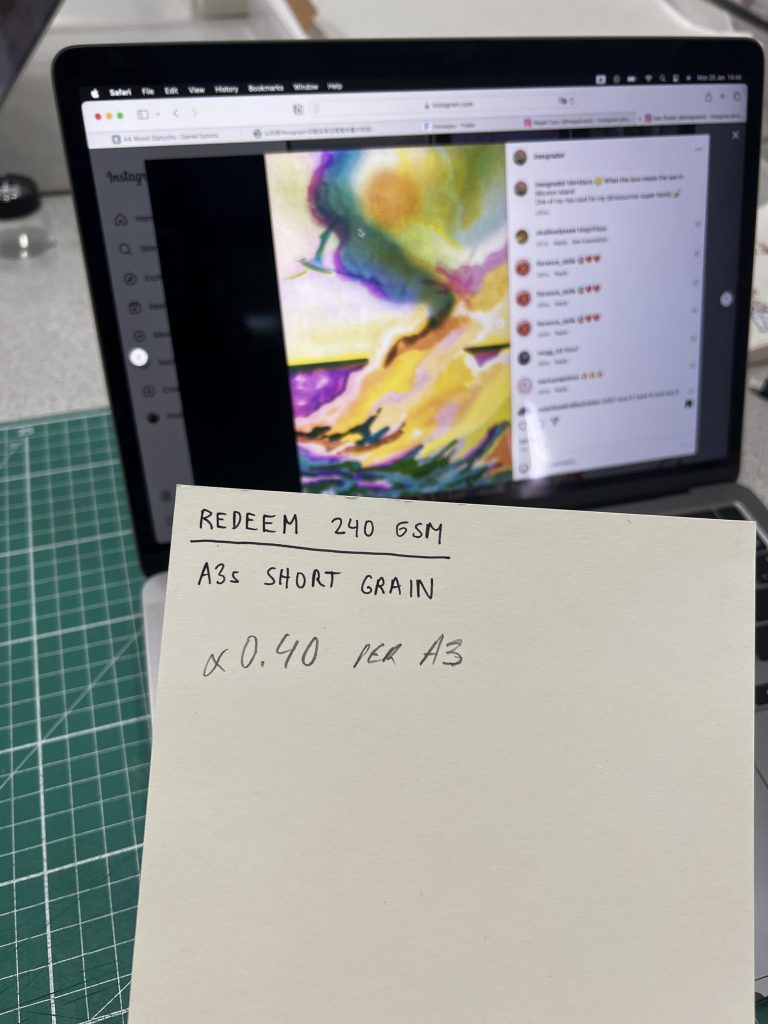
Risograph printing is not for perfect work. There are always situations happening during the printing process. Fine details can get lost or muddy. For Inès Gradot’s artwork I used thick papers, Redeem 240 gsm, the friction causes the paper rubbing when going through the ink roll, which may lead to the displacement of the output. Even though I print 10 same illustrations repeatedly, each of them is unique.
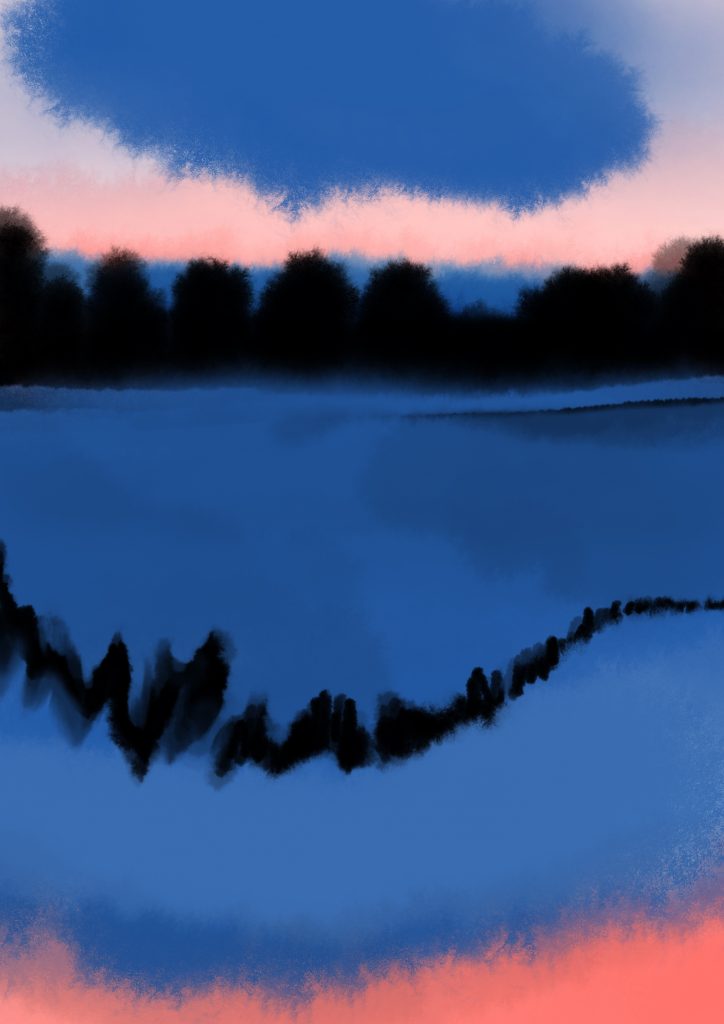


What I learned from the risograph printing process is that the medium encourages experimentation with layering, overprinting, and texture. Printing one layer at a time allows artists to experiment with various effects and allows for improvisation. I experienced the whole process of testing and adjusting. Until everything is working well, the final paper will be on the field. I prefer the risograph outcomes than the digital painting, since I see the blending of inks.